
What Every Educator Should Know About Disability Pride Month
History, Identity, Disability Justice, and Why It Matters in Our Classrooms
Written by Sarah Graham | Founder Lessons-in-Liberation™
A Note About Language: Language around disability is personal. Throughout this article, I use both identity-first language (such as “disabled person”) and person-first language (such as “person with a disability”), reflecting the diversity of preferences within the disability community. The most respectful approach is to honor the language individuals choose for themselves.
1 in 4 adults have a disability ¹
I am one of those 1 in 4.
Every July, communities across the United States celebrate Disability Pride Month. Yet for many educators, it remains one of the least discussed cultural observances in our schools.
Disability is not a niche topic. It is not is not a side topic. It is not a conversation reserved for special education classrooms.
Even as a veteran special educator, I realized there was still so much I had to unlearn about ableism in order to better understand disability through the lens of identity, culture, community, and justice.
As I write this, Disability Pride Month carries a different meaning for me than it once did. After spending much of the past year in and out of doctors’ offices navigating surgeries, recovery, and healing, I have a greater appreciation for accessibility, advocacy, and the many ways disability shapes our lives. While this article is educational, it is also deeply personal.
Like many educators, I am still learning.
That learning has reminded me that disability is not simply something we teach about. It is something many of us will experience ourselves, whether temporarily or permanently, or through someone we love.
Disability is part of human diversity. It intersects with every race, culture, language, religion, gender identity, sexual orientation, and socioeconomic background.
If we believe every student deserves to see themselves reflected in the stories we tell, then disability belongs in those stories, too.
What Is Disability Pride Month?
For many people, the word pride can feel surprising when paired with disability.
Disability Pride does not mean celebrating pain, illness, or the barriers disabled people experience. But, it is about recognizing disability as a natural part of human diversity rather than something to hide or “fix.”
It is about affirming that disabled people deserve dignity, belonging, access, and the opportunity to participate fully in every aspect of society.²
Disability Pride Month is observed every July to celebrate disability identity, culture, and community while recognizing the ongoing work to remove barriers and expand inclusion. July was chosen because it marks the anniversary of the Americans with Disabilities Act (ADA), which was signed into law on July 26, 1990. ²
Like Pride Month, Hispanic Heritage Month, Black History Month, or Women’s History Month, Disability Pride Month creates space to celebrate a community whose stories have too often been overlooked, misunderstood, or erased.
To understand why Disability Pride Month exists, it helps to understand the disability rights movement that made it possible.
A Brief History of Disability Pride
The disability rights movement has shaped many aspects of daily life that people now take for granted.
The Americans with Disabilities Act (ADA) is one of the most significant civil rights laws in the United States history. Signed into law in 1990, it prohibits discrimination against people with disabilities in employment, transportation, public accommodations, telecommunications, and state and local government services. Before the ADA, many public buildings, schools, and businesses were inaccessible to people with disabilities. The law transformed everyday life by requiring greater accessibility across public spaces, education, transportation, workplaces, and government services.³
The first Disability Pride celebration was held in Boston in 1990, shortly after the ADA became law. Since then, Disability Pride events have taken place across the country through festivals, parades, educational programs, and community celebrations that recognize disability as an identity rather than a limitation.³
Although Disability Pride began in the United States, it is now celebrated around the world, from New Zealand to South Africa, and from the United Kingdom to South Korea, through parades, festivals, and community events.
The Disability Pride Flag has also become an important symbol of the disability community. The flag represents the diversity of disability experiences while recognizing the resilience, creativity, and strength found throughout the community.
The current Disability Pride Flag was redesigned in 2021 by disabled writer Ann Magill to make the original design more accessible for people with visual sensitivities.
The charcoal gray background represents mourning and remembrance for disabled people who have experienced discrimination, violence, abuse, neglect, and ableism.
The diagonal band represents breaking through the barriers society places in front of disabled people. Each color represents a different part of the disability community:
- ❤️ Red represents people with physical disabilities.
- 💛 Gold represents neurodivergent people.
- 🤍 White represents invisible and undiagnosed disabilities.
- 💙 Blue represents people with psychiatric disabilities.
- 💚 Green represents people with sensory disabilities.
Together, the colors remind us that disability is not one experience. It is a diverse community withmany identities and lived experiences.
While the ADA transformed accessibility in the United States, the work is far from finished. Disabled people continue to face barriers to healthcare, housing, employment, education, transportation, and public life.
Civil rights require continual advocacy.
Understanding Disability Justice
The disability rights movement and the disability justice movement are connected, but they are not the same. The disability rights movement focused primarily on legal protections, accessibility, and equal access. Disability justice expands that conversation.
Developed by disabled activists, particularly disabled women of color, including Patty Berne, Mia Mingus, Alice Wong, Stacey Milbern, Leroy F. Moore Jr., Eli Clare, Sebastian Margaret, and Judy Heumann (often called the “Mother of the Disability Rights Movement”), disability justice recognizes that disability cannot be separated from race, gender, sexuality, immigration status, poverty, or other identities.
It emphasizes interdependence, collective care, accessibility, and belonging.
Disability justice reminds us that equity cannot exist if some members of our communities continue to experience barriers because of systems that exclude them.
These conversations remain especially important today. Many disability advocates have expressed concern that reductions in access to programs like Medicaid, Medicare, and community-based services can create new barriers for disabled people, limiting access to healthcare, independent living, and essential supports.3
Legal protections matter.
So do the resources that allow people to fully participate in society.
Why Disability Pride Matters in Your Classrooms
One of the biggest misconceptions about disability is that it only affects a small group of people.
The reality is much different. The CDC estimates that over 70 million U.S. adults live with 1 or more disabilities.1
Some people are born disabled. Others become disabled through illness, injury, chronic conditions, mental health challenges, or aging.
For many of us, disability is not a question of if. It is a question of when.
That is one reason Disability Pride Month matters to everyone. Disability is not just a healthcare issue. It’s an education issue. It’s a civil rights issue. It’s a curriculum issue. It’s a human issue. This is why accessibility is not about creating accommodations for someone else. It is about creating communities where every person can belong throughout every stage of life.
But in schools far too often, disability appears in the curriculum only as tragedy, inspiration, or something to overcome.
But disability is also identity.
It is community.
It is culture.
It is expertise.
It is joy.
Like every community, disabled people have diverse experiences. Some disabilities are visible. Others are invisible. Some people identify strongly with disability culture, while others may not. Some disabilities are temporary, while others are lifelong.
There is no single disabled experience.
That is why listening to diverse disabled voices matters.
When we center lived experiences rather than assumptions, we move beyond stereotypes and begin to understand disability with greater nuance, respect, and humanity. Students deserve to encounter disabled authors, activists, artists, athletes, scientists, inventors, and leaders throughout the school year.
Representation matters. So does accessibility.
Where to Start
If you’re looking for meaningful ways to recognize Disability Pride Month throughout the year, here are a few ideas:
- Center disabled voices. Read books, articles, and memoirs by disabled authors
- Include disability history alongside other civil rights movements.
- Audit your classroom materials for diverse disabled representation.
- Normalize accessibility practices such as captions, image descriptions, and flexible learning options like Universal Design for Learning (UDL) techniques.
- Make space for conversations about disability. Create opportunities for students to ask thoughtful questions, explore different perspectives, and challenge stereotypes.
- Challenge ableist language. Words and phrases matter. Help students recognize language that stigmatizes disability and encourage more respectful alternatives.
- Learn from disabled educators, creators, and advocates. A few of my favorites to follow are:
- Recognize disability as a strength as well as an identity. Help students understand that disability is not simply a limitation. For many people, it is also a source of community, culture, creativity, and pride.
- Move beyond “overcoming” narratives. Choose stories that celebrate disabled people’s identities, relationships, achievements, and everyday lives, not just their challenges.
- Ask yourself one simple question: Whose stories are missing?
Our students deserve to see a world where everyone belongs.
Sometimes the first step toward creating more inclusive classrooms is examining the stories we’ve inherited and choosing to write better ones.
Sources
-
CDC. Data Shows Over 70 Million U.S. Adults Reported Having a Disability https://www.cdc.gov/media/releases/2024/s0716-Adult-disability.html -
The Arc. Why and How to Celebrate Disability Pride Month. https://thearc.org/blog/why-and-how-to-celebrate-disability-pride-month/ -
ADA National Network. Americans with Disabilities Act (ADA) Overview. https://adata.org/learn-about-ada -
American Progress. (2025). The Truth About the One Big Beautiful Bill Act's Cuts to Medicaid and Medicare. https://www.americanprogress.org/article/the-truth-about-the-one-big-beautiful-bill-acts-cuts-to-medicaid-and-medicare/ -
World Health Organization. Disability https://www.who.int/news-room/fact-sheets/detail/disability-and-health -
Disabled And Here. Stock photos https://affecttheverb.com/collection/ -
Sins Invalid. 10 Principles of Disability Justice. https://sinsinvalid.org/about-sins/
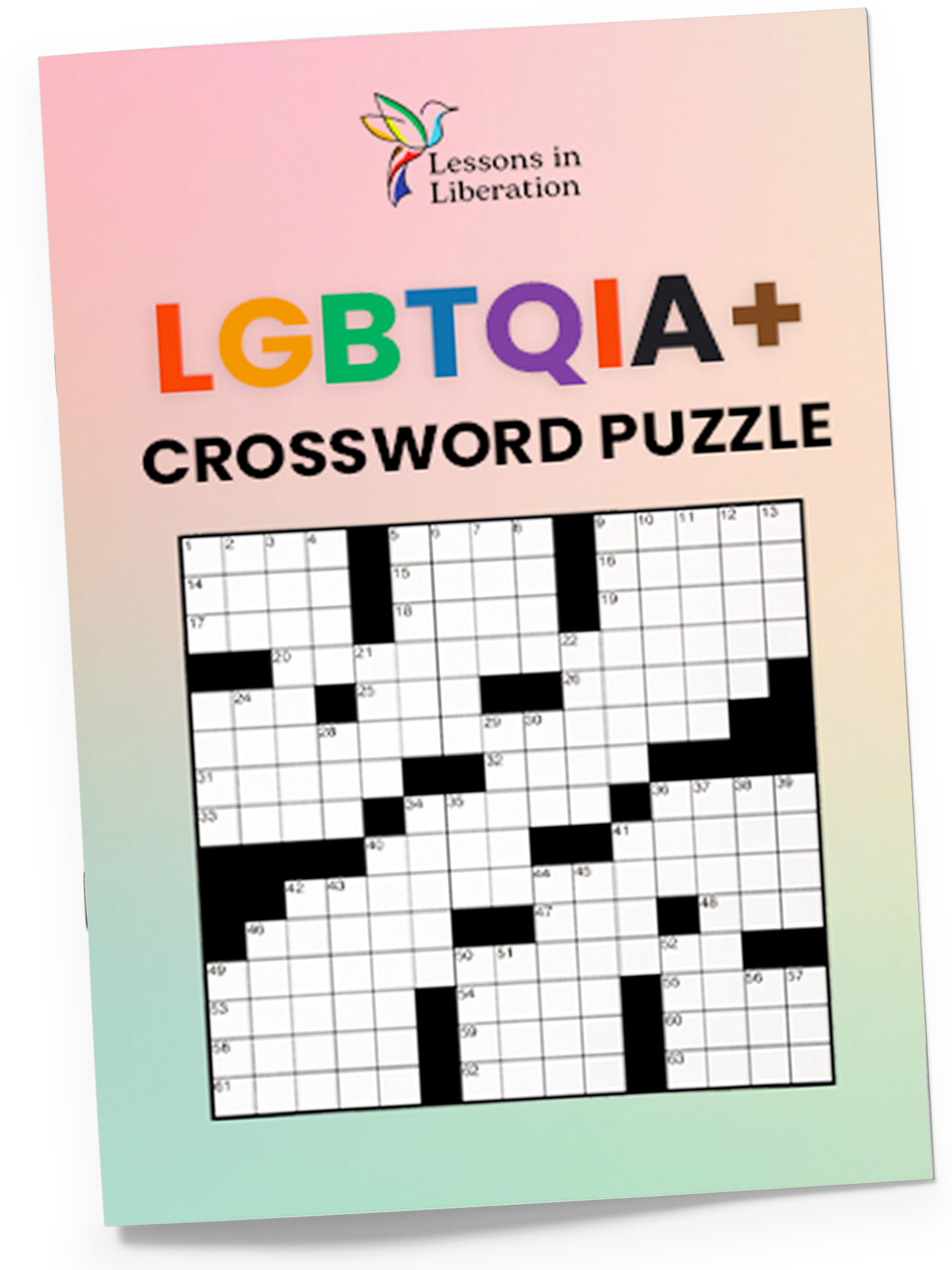
Engage learners with this complimentary hands-on activity –
download it for free here!
Engage learners with this complimentary hands-on activity – download it for free here!